
How to Become a Wedding Officiant: A Practical Guide
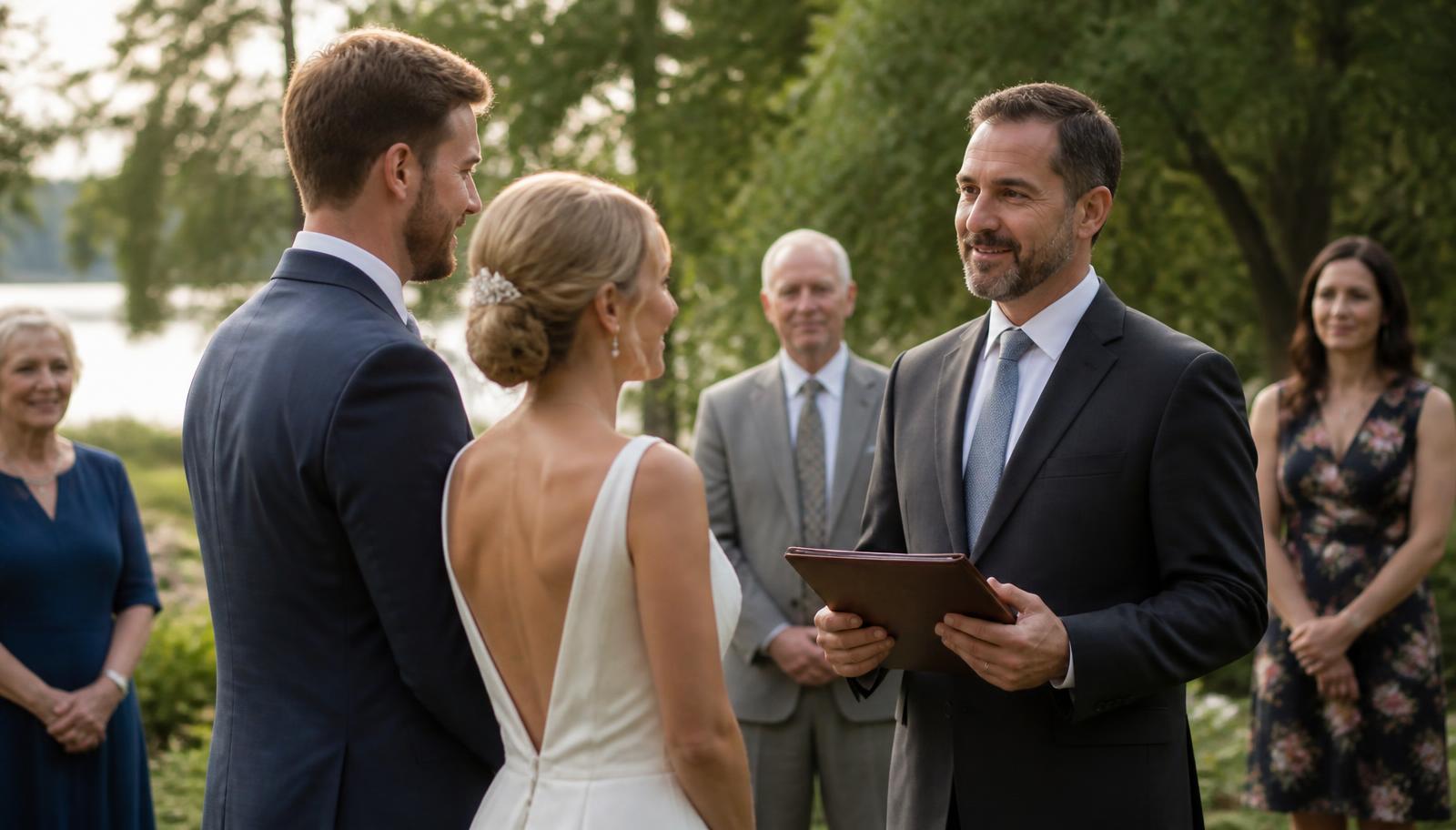
Becoming a wedding officiant involves more than obtaining an online ordination certificate. You must confirm that you are legally authorized where the ceremony will occur, understand the couple's marriage license, prepare an appropriate ceremony, and complete the paperwork accurately. This practical guide draws on firsthand experience officiating weddings in Pennsylvania and New Jersey.
How Do You Become a Wedding Officiant?
Becoming a wedding officiant is generally easier than many people expect. The basic process is to determine who is legally authorized to perform marriages in your state, obtain the appropriate ordination or authorization, learn how to complete a marriage license, and prepare yourself to conduct a ceremony professionally.
I became ordained online through Universal Life Church because it was fast and convenient. I did not have to register separately with the state, but I still needed to make sure that my state recognized me as an authorized minister.
That verification is one of the most important steps. An ordination certificate by itself does not automatically guarantee that you can legally perform a marriage everywhere. Marriage laws vary by state, and local offices may have their own procedures or interpretations.
Before performing a wedding, contact the office that issued the couple's marriage license and ask whether your particular ordination qualifies you to officiate. Pennsylvania law identifies the people and religious organizations authorized to solemnize marriages, and an officiant cannot perform a marriage without the couple first obtaining a valid marriage license. Pennsylvania General Assembly
Do You Have to Get Ordained Online?
Online ordination is one possible route, but it is not the only way to become authorized to perform weddings.
Depending on where you live, authorized officiants may include:
- •Ordained ministers and other members of the clergy
- •Judges and certain court officials
- •Mayors or other designated public officials
- •Certified civil celebrants
- •Representatives of recognized religious organizations
New Jersey, for example, permits members of the clergy of every religion to perform marriages without becoming certified civil celebrants. The state also offers a separate certification process for people who want to become civil celebrants. New Jersey Department of State
Do not assume that rules in another state apply to you. Search for the marriage-officiant requirements in the state and county where the ceremony will take place. When in doubt, contact the marriage-license office directly.
What Do You Need to Start Officiating Weddings?
It does not take a large investment to get started. My basic equipment and professional needs include:
- •Reliable transportation
- •Appropriate clothing, such as a suit
- •A prepared ceremony script
- •A dependable way to accept payments
- •A phone and reliable communication
- •A pen for completing the marriage license
- •A folder or other secure way to protect the paperwork
- •Proof of ordination or authority when required
You do not need an elaborate office or expensive equipment. Your most important responsibilities are arriving on time, presenting yourself professionally, conducting the ceremony confidently, and completing the marriage license accurately.
A new officiant is also unlikely to begin with a 300-person wedding. Many of my appointments are small weddings, private ceremonies, or simple marriage-license signings. These smaller appointments are a good way to gain experience before accepting larger ceremonies.
What Happens During a Wedding Ceremony?
A wedding ceremony can be simple or elaborate. I create a script before arriving so that I know what I am going to say and do.
My standard ceremony usually includes:
- •Welcoming the couple and their guests
- •A short introduction about marriage
- •The couple's vows
- •The exchange of rings
- •The pronouncement that the couple is married
- •A closing statement
These are the parts I normally include in a complete ceremony, but an officiant should distinguish between ceremony traditions and the precise legal requirements of the state. Rings, for example, may be meaningful to the couple, but they are not necessarily a legal requirement.
Before the wedding, I ask whether the couple has written personal vows or would prefer to repeat vows after me. If they have their own vows, I create a place in my script for them.
I also ask whether they want the ceremony connected to a particular faith. I can adjust my wording depending on their religious beliefs and the type of ceremony they want. An officiant should never assume that every couple wants the same religious language.
How Do You Write a Wedding Ceremony Script?
You do not have to create every script from nothing. Begin with a dependable structure and customize it for each couple.
A practical script may follow this order:
Welcome the Guests
Introduce yourself and welcome everyone. You can briefly explain why they have gathered and acknowledge the importance of the occasion.
Speak About the Couple and Marriage
Include a short message about love, commitment, family, or the couple's relationship. This section can be religious, spiritual, or completely secular.
Include the Couple's Vows
Ask whether they want to read personal vows, repeat vows after you, or use traditional wording. Clearly mark this section in your script so everyone knows when to speak.
Exchange the Rings
If the couple is exchanging rings, introduce that portion and provide any words they should repeat.
Pronounce the Couple Married
Conclude the ceremony by officially recognizing their marriage using wording appropriate for your location and authority.
Always print the script or keep a reliable backup. Phones can lose power, lock unexpectedly, or become difficult to read outside.
What Was My First Wedding Like?
My first wedding was held at a hotel, which taught me that weddings can happen almost anywhere. The couple does not necessarily need a church or traditional wedding venue.
The bride was running late, but her family had already arrived. I used that time to speak with some of the family members and help keep the atmosphere friendly.
Before arriving, I had already written my ceremony script, discussed payment with the couple, and selected professional clothing. I wore black pants, a black suit jacket, and a white dress shirt.
Preparing those details in advance allowed me to focus on the ceremony instead of trying to figure everything out while standing in front of the guests.
What Should You Ask the Couple Before the Wedding?
Good communication prevents uncomfortable surprises. When a couple contacts me, I ask questions such as:
- •What are both of your full names?
- •How are your names pronounced?
- •Where and when will the ceremony take place?
- •How many guests are expected?
- •Do you already have a valid marriage license?
- •Which office issued the license?
- •Do you want a religious, spiritual, or secular ceremony?
- •Do you have personal vows?
- •Would you rather repeat vows after me?
- •Will you exchange rings?
- •Are there any special readings or traditions?
- •Who will bring the marriage license?
- •How and when will payment be made?
Name pronunciation deserves more attention than people may realize. I once performed a wedding where I could barely pronounce the couple's names. It was embarrassing, and it taught me to ask in advance.
If a name is unfamiliar, ask the person to send a voice recording. Practice saying it several times and write the pronunciation into your script.
How Do You Handle the Marriage License?
The marriage license is one of the most important parts of the job. A beautiful ceremony does not excuse careless paperwork.
Before performing the wedding, confirm that:
- •The couple has the correct marriage license
- •The license is valid on the ceremony date
- •The ceremony is taking place where the license permits
- •The names and other information appear correct
- •You understand which sections you must complete
- •You know where and when the completed document must be returned
Never guess when completing an unfamiliar marriage license. Read the accompanying instructions or contact the issuing office.
Completing a Pennsylvania Marriage License
On the Pennsylvania licenses I have handled, the officiant's section asks for information such as my title, address, the location or county, the ceremony date, and my signature.
After the ceremony, the officiant completes the marriage return and submits it to the office that issued the license. Allegheny County, for example, instructs the officiant to complete the bottom portion and file it with the issuing marriage-license office. Allegheny County
Follow the instructions from the particular issuing county because formats and procedures may differ.
Completing a New Jersey Marriage License
New Jersey marriage paperwork contains four copies. The same required information must be completed on each applicable copy, which makes the process more repetitive than Pennsylvania's.
According to official New Jersey instructions, copies one and two are returned to the registrar in the municipality where the ceremony occurred, copy three is given to the couple, and copy four is kept by the officiant. The first two copies must generally be returned within five days. Warren County, New Jersey officiant instructions
New Jersey also requires witnesses, so an officiant should review the license and its instructions before beginning the ceremony.
What Happens If You Make a Mistake?
I have accidentally entered the wrong date on a marriage license by writing the previous day's date. The license was rejected and had to be corrected.
Most couples understand when a mistake can be fixed quickly. However, I had one client who became very upset, and I understood why. The marriage license is important legal paperwork, and couples expect the officiant to complete it correctly.
That experience changed my process. I now triple-check information before submitting a marriage license. I still feel slightly nervous when completing one, but that nervousness reminds me to slow down.
Check the following before returning the license:
- •The ceremony date
- •The ceremony location
- •The couple's names
- •Your name, title, and address
- •All required signatures
- •Witness information, if applicable
- •Which copies go to the couple, registrar, government office, or officiant
- •The return deadline and destination
If you discover an error, contact the issuing office immediately. Do not cross information out, use correction fluid, or alter a filed record without instructions. New Jersey, for example, directs marriage-record corrections through the local registrar or Office of Vital Statistics and may require supporting documentation. New Jersey Department of Health
Can You Officiate If You Are Shy?
Yes. You do not need to be a professional public speaker to begin officiating weddings.
If you feel nervous standing in front of people, use your script. Most of the time, you can concentrate on reading instead of focusing on everyone looking at you.
Practice the script aloud before the wedding. Reading silently is not enough because a sentence that looks natural on paper may sound awkward when spoken.
Mark your script to remind yourself when to:
- •Pause
- •Look at the couple
- •Ask the couple to repeat after you
- •Allow personal vows
- •Introduce the rings
- •Invite the couple to kiss
- •Make the final announcement
Remember that a wedding is normally a happy occasion. The guests want the ceremony to go well. Be friendly, greet people, smile, and speak slowly. You do not have to perform like an actor.
Should You Offer License Signings and Full Ceremonies?
I offer two main services.
The first is a marriage-license signing for couples who already had their own ceremony or only want a simple legal solemnization. This costs less because the appointment primarily involves a brief declaration or ceremony and completing the paperwork.
The second is a complete ceremony with a customized script. I charge more because it requires preparation, writing, coordination, professional presentation, travel, and speaking in front of an audience.
I may also charge more for a large wedding because the expectations and pressure are different from those of a small private ceremony. Most of my clients, however, request smaller weddings rather than ceremonies with hundreds of guests.
When setting prices, consider:
- •Travel distance and tolls
- •Ceremony size
- •Script customization
- •Rehearsal time
- •Waiting time
- •Holiday or last-minute requests
- •Parking costs
- •Paperwork responsibilities
- •Your experience and local market
Do not describe a signing-only service as merely filling out paperwork. Even the shortest legal ceremony must satisfy the applicable law, and you are still responsible for confirming the license and completing the marriage record correctly.
When Should an Officiant Collect Payment?
I currently verify how the couple plans to pay and generally collect payment after the ceremony. However, I have considered requiring half upfront because an officiant can spend time preparing, travel to the location, and then discover that the couple canceled or is not ready.
A deposit is reasonable for a professional wedding service. Your written agreement should explain:
- •The total price
- •The deposit amount
- •When the remaining balance is due
- •What happens if the couple cancels
- •Whether the deposit is refundable
- •How long you will wait if the ceremony starts late
- •Additional travel, rehearsal, or waiting fees
Discuss payment before the wedding day. The ceremony is not the time to negotiate your price.
How Do Wedding Officiants Find Clients?
The Knot was one of my earlier advertising methods. Although I no longer pay for its monthly advertising because I was not booking weddings every month, my old listing still produces results.
I have also tried Facebook advertising, and couples have found me through Google and search engine optimization. Facebook messages do not always become appointments. Many people ask a question and then never reply.
My most dependable sources have been:
- •My existing presence on The Knot
- •Google searches
- •Search engine optimization
- •Facebook inquiries
- •My business website
Paid advertising does not automatically make sense when you are only booking occasional weddings. Track where each real booking originates, not merely how many messages you receive.
A person asking for a price is a lead, but that does not mean you earned enough from the advertisement to justify its cost.
Is Becoming a Wedding Officiant Worth It?
Wedding officiating can be a good service for someone who is dependable, friendly, comfortable working with legal paperwork, and willing to speak in front of others.
It does not require a large investment, but it carries real responsibility. You must make sure you are authorized, understand the marriage license, arrive professionally dressed, pronounce the couple's names correctly, and carefully complete and return the paperwork.
You will probably begin with small ceremonies rather than enormous weddings. That is not a disadvantage. Smaller weddings allow you to develop your confidence, improve your scripts, and learn the administrative side of the work.
Most ceremonies go smoothly because they are happy occasions. Be prepared, greet people warmly, rely on your script when you feel nervous, and never rush through the marriage license.
The ceremony may only last a few minutes, but the couple will remember it for the rest of their lives.
Need a Wedding Officiant in Philadelphia or South Jersey?
Whether you need a simple marriage-license signing, a small private ceremony, or a personalized wedding ceremony, Mobile Notary Philadelphia Services can help you create an occasion that fits your needs. Contact us to discuss your ceremony location, marriage license, preferred wording, personal vows, religious or secular preferences, and wedding date.
Couples are responsible for obtaining a valid marriage license before the ceremony. Authorization, witness, ceremony, and marriage-return requirements vary by jurisdiction.
About the author
Jermaine Brantley — Mobile Notary Philadelphia
I officiate weddings and marriage-license signings across Philadelphia and South Jersey, and I provide mobile notary and apostille services throughout Pennsylvania and New Jersey.